- The 254 Report
- Posts
- Kenya's Food Crisis: 3 Legislative Pathways to Combat NCDs Killing 43% of Citizens
Kenya's Food Crisis: 3 Legislative Pathways to Combat NCDs Killing 43% of Citizens


Gerald Kombo & Henry Naminde
November 30, 2025
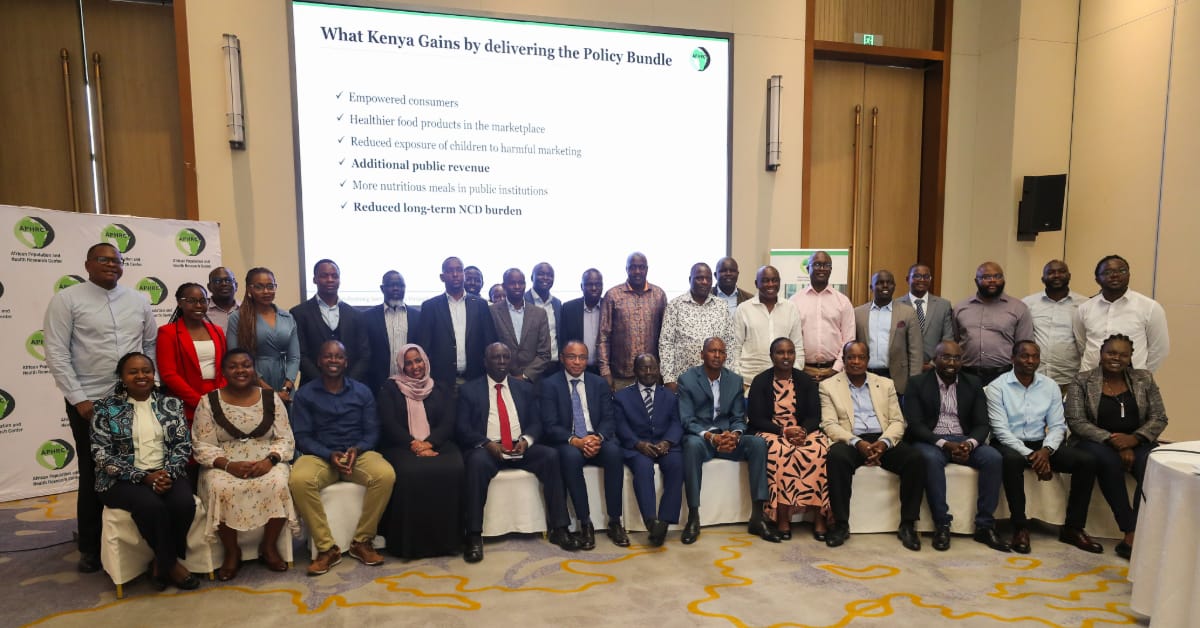
On November 28, 2025, Kenya's Parliament gathered at Argyle Grand Hotel for a critical workshop: Legislative Action to Regulate Unhealthy Food Environments: A Capacity Building Workshop with the National Assembly Standing Committee on Health. The African Population and Health Research Center (APHRC) and legal experts presented three distinct legislative pathways for regulating unhealthy foods, each with different timelines, risks, and implementation mechanisms.
The question before Parliament was not whether to regulate, but how.
The NCD Crisis: Why Kenya Must Act Now
Before presenting the legislative pathways, health experts outlined the urgent crisis driving the need for food regulation. Non-communicable diseases (NCDs) are overwhelming Kenya's health system and economy.
The Scale of the Problem
NCDs now account for 43% of all deaths in Kenya. When you visit any hospital, medical records indicate that approximately half of those who died as a result of being admitted are dying from NCDs. This is not just a health crisis; it's an economic crisis affecting the country's productive workforce.
"We cannot do it alone, and that's why there's a need for engagement and dialogue today, but also as a continuing process to ensure that what we are looking at in terms of prevention, to ensure that [NCDs] don't occur."
The Five Risk Factors
NCDs have many contributing factors, but most of the rising prevalence is due to five modifiable risk factors that increase the chance of developing an NCD:
Risk Factor | Description |
|---|---|
Tobacco use | Smoking and tobacco consumption |
Alcohol use | Excessive alcohol consumption |
Unhealthy dietary lifestyle | High sugar, salt, fat intake; low fruits/vegetables |
Physical inactivity | Sedentary lifestyles |
Air pollution | Environmental exposure |
While genetic predisposition also plays a role, these five factors are within society's control to address through policy and regulation.
Obesity as a Disease
The World Health Organization has classified obesity as a disease on its own, because once individuals reach certain weight thresholds, systemic health complications inevitably follow. The statistics in Kenya are alarming:
Population | Obesity Rate |
|---|---|
Women | 13% |
Men | 4% |
This gender disparity is particularly concerning, with women facing more than three times the obesity rate of men.
Cancers:
Currently, 44,000 Kenyans are diagnosed with cancer annually. Several cancers have strong relationships with diet and nutrition:
Colorectal cancer
Esophageal cancer
Stomach cancer
Cardiovascular Diseases:
These have a huge impact on health systems due to the high cost of managing chronic heart conditions and the need for interventions like heart transplants.
Diabetes and Kidney Disease:
Large populations are dealing with chronic kidney disease as a late-stage result of diabetes and hypertension, both of which result from unhealthy diets. The burden includes the need for dialysis and kidney transplants.
Liver Disease:
Mainly due to high cholesterol and related dietary factors.
The Dominant Risk Factor
When comparing the five NCD risk factors, unhealthy diet emerges as the most significant contributor to all the disease burdens. This is precisely why food environment regulation is so critical.
"As you can see from this graph, [unhealthy diet is] contributing to all the conditions. That's why we really need to address the issue."
The Protective Power of Good Nutrition
The presentation emphasized that nutrition is not inherently bad. In fact, good nutrition provides powerful protective factors:
Plant-Based Diets: Diets rich in vegetables, legumes, and whole grains help prevent diabetes and certain cancers.
Fruits and Vegetables: Independent of other dietary factors, consuming adequate fruits and vegetables contributes to preventing disease. Diets rich in fruits and vegetables reduce the likelihood of obesity and decrease the chances of breast cancer.
Healthy Fats: Fish, nuts, and avocados reduce the likelihood of cardiovascular disease.
The concern is not that people should never consume certain foods, but that consumption levels have become excessive, creating population-level health crises.
What Countries Are Doing
Some countries have already taken regulatory action. South Africa, for example, has mandated by law minimum nutritional standards for certain foods. Evidence is emerging about the effectiveness of such interventions, including some promising findings about preventing or delaying the onset of certain types of diabetes through dietary regulation.
The message was clear: Kenya faces a preventable health and economic crisis. The solution requires moving from individual responsibility to population-level intervention through food environment regulation.
The Three Legislative Pathways
A legal expert presented a structured analysis of three approaches Kenya could take, drawing lessons from both successful implementations and cautionary failures globally.
Pathway One: Delegated Legislation
This pathway utilizes regulations created by ministries or government agencies under existing parent legislation, such as the Food, Drugs and Chemical Substances Act (CAP 254). The ministry drafts regulations, which are then tabled in Parliament for approval through the Delegated Legislation Committee.
Has this approach been used elsewhere?
Yes, but with mixed results. South Africa attempted this pathway in 2023 when the Ministry of Health developed regulations relating to labeling and advertising of foods under their Foodstuffs, Cosmetics and Disinfectants Act of 1972 (similar to Kenya's CAP 254).
"The challenge with this approach in South Africa is that those regulations have never been tabled in Parliament or approved. So they are stuck in the Ministry three years now. There are a lot of issues happening trying to pull them out of the ministry to Parliament so that they can come into force."
The South African regulations would mandate warning labels on unhealthy foods and restrict marketing, but after three years, they remain trapped in bureaucratic processes. This demonstrates the high stall risk associated with delegated legislation.
Aspect | Details |
|---|---|
Approach | Ministry creates regulations under existing parent law |
Example | South Africa (2023) |
Parent Law | Foodstuffs, Cosmetics and Disinfectants Act of 1972 |
Status | Stuck in Ministry for 3 years, never tabled in Parliament |
Risk | High stall risk due to bureaucratic delays |
Pathway Two: National and Regional Standards
This pathway achieves food regulation through standards created by the Kenya Bureau of Standards (KEBS) or the East African Community (EAC). Rather than passing laws through Parliament, technical standards are developed that automatically become binding.
If Kenya wants to mandate that foods with high levels of salt, sugar, and fat bear warning labels, this can be achieved through a national standard. KEBS can initiate that process domestically, or it can be done at the regional level through the East African Community.
"The East African Community is developing Front of Pack Nutrition Label Guidelines. We know the EAC labels once they have been enacted, they actually automatically come into effect in member partner states."
Has this approach been used successfully elsewhere?
Yes. Mexico provides the strongest example. After amending their General Health Law in 2018, Mexico operationalized the provisions through Standard NOM 051 SCFI/SSA1-2010. This standard now mandates black octagonal warning labels and restricts marketing of unhealthy foods to children, along with taxation measures.
Aspect | Details |
|---|---|
Approach | Technical standards through KEBS or EAC |
Example | Mexico (2018) |
Standard | NOM 051 SCFI/SSA1-2010 |
Outcome | Black octagonal warning labels, marketing restrictions, taxation |
Advantage | Faster than parliamentary process; automatic regional adoption |
This pathway relies primarily on government agencies and technical processes rather than parliamentary debate, making it faster but potentially less democratic.
Pathway Three: Parliamentary Amendment or New Legislation
This pathway brings the issue directly to Parliament, either by amending existing laws or enacting entirely new legislation. It requires the most political capital but offers the strongest legal foundation and greatest difficulty of reversal.
Option A: Amending Existing Laws
Parliament can amend relevant national acts to incorporate food regulation provisions:
Act to Amend | Purpose |
|---|---|
Consumer Protection Act | Mandate front-of-pack warning labels |
Basic Education Act | Restrict marketing of unhealthy foods in and around schools |
Tax Laws | Impose excise duties on unhealthy food products |
Examples of successful amendments:
Country | Year | Action | Outcome |
|---|---|---|---|
Mexico | 2018 | Amended General Health Law | Enabled front-of-pack labeling and marketing restrictions |
Canada | 2022 | Amended Food and Drugs Act | Mandatory labels commencing January 1, 2026 |
Peru | 2018 | Enacted Law 30021 | Law on Promotion of Healthy Eating |
Option B: Enacting Entirely New Legislation
Kenya could follow the path of countries that created standalone laws specifically for food environment regulation:
Country | Year | Law | Key Provisions |
|---|---|---|---|
Chile | 2012 | Law 20.606 | Black stop-sign warning labels; prohibited marketing to children |
Argentina | 2021 | Law 27.642 | Warning labels and advertising restrictions |
Colombia | 2021 | "Junk Food Law" | Marketing restrictions and front-of-pack warnings |
The legal expert proposed that Kenya could enact a law tentatively called the Healthy Eating and Feeding Act, which would:
"Speak directly to those who eat and how we feed. To curb the diseases. We are not interested in so many things. We just want to promote good eating and living."
Proposed provisions of the Healthy Eating and Feeding Act:
Mandatory front-of-pack warning labels
Restrict marketing to children
Prohibit government procurement of unhealthy foods (similar to prohibition on purchasing drugs or alcohol with public funds)
Establish a healthy eating levy (similar to tobacco levies)
Rely on existing institutions (Competition Authority, Communications Authority of Kenya, KEBS) for implementation
Parliamentary Responses: Finance Committee Perspective
A member of the Finance Committee acknowledged the team's December 2024 appearance before their committee and emphasized the need for careful framing.
"We were careful not to repeat the issue of Finance Bill 2024 that the Parliament of Kenya caused. The bill had every good intention. But because of the world of disinformation and misinformation, the kind of help was burned down."
The Finance Bill 2024 included proposals to tax juices, which the public rejected as "taxing the only thing we feed our children." The lesson: framing determines political survival.
Key Concerns Raised
Tax Incidence and Measurement:
For taxation to be effective, Kenya needs to identify thresholds and establish measurement standards. How do we measure sugar content? For alcohol, Kenya successfully shifted from measuring quantities to measuring alcohol content (quality), which pushed prices up and reduced access to high-alcohol products for young people.
Regional Harmonization:
The East African Community and COMESA agreements must be considered. Tax policy needs regional coordination to prevent cross-border issues.
Public Engagement:
This time, advocates must engage the public early. The Finance Committee expressed excitement about participating in this "great history and move of transforming our country" but emphasized the need for proper public communication before legislation moves forward.
Legal Expert's Immediate Solution
A legal practitioner attending the workshop proposed an actionable short-term approach while longer legislation is developed.
Based on research into the UK's Soft Drinks Industry Levy (introduced in 2018), he recommended Kenya immediately introduce a levy on unhealthy foods through amending the Excise Duty Law.
The UK Soft Drinks Industry Levy: Three Effects
Effect | Outcome |
|---|---|
Reformulation | Manufacturers reduced sugar content to avoid the levy |
Price Increase | Higher prices reduced consumer demand |
Revenue Generation | Government collected funds to subsidize healthy foods |
"As an immediate solution, amend the Excise Duty law so that we have a levy. If we do that, then we will reduce importation and make it costly."
He also called for restrictions on advertising unhealthy foods to children, which would discourage interest in consuming these products.
Chair of Health Committee: Hon. Dr. James Nyikal's Vision

Hon. Dr. James Nyikal, Chair of National Assembly Health Committee and MP for Seme County
Hon. Dr. James Nyikal, Chair of the National Assembly Departmental Committee on Health and MP for Seme, delivered extensive remarks emphasizing the importance of regulating the food environment from production through consumption.
The Food-Health Connection
"If you look at health, our health is a product of what we eat and what we drink."
He emphasized that addressing social determinants of health including food, water, housing, and education is fundamental to preventing disease rather than only treating it.
The NCD Crisis
Dr. Nyikal highlighted that Kenya faces a dual burden: infectious diseases and non-communicable diseases (NCDs). While vaccination addresses infectious diseases, NCDs require a different approach focused on prevention at the food environment level.
On Policy and Legislation
"There is something we are good at as politicians: legislation. If there are messages that we pass to people in terms of education... we can pass correct information and we also pass wrong information."
He called for advocates not just to present policy recommendations, but to help draft the actual legislation and work with MPs to get bills introduced and passed.
Beyond Packaged Foods
Dr. Nyikal raised important points about expanding the scope beyond processed packaged foods:
Food handling in markets (vegetables cleaned in dirty water, fecal matter contamination)
Training of hotel cooks and institutional food preparers on healthy cooking
Making healthy food available and affordable so people have real choices
"Let's make them [healthy foods] available. Let's make them healthy so that is what people eat."
He cautioned that while taxation is important, it must not make food unavailable to people who cannot afford it, requiring careful consideration of equity impacts.
MP Perspectives: Practical Implementation Concerns
Hon. Timothy Kipchumba Toroitich (Marakwet West)
Drawing on experience working with the State of Massachusetts and the CDC, he affirmed that legislation can change behavior and cut disease rates.
"We had a situation where schools were being supplied with sugary snacks, and kids became obese. The regulation then said no more supplies of these things, including selling no groceries around the schools. So it is possible."
He also raised the critical issue of importation enforcement, sharing an anecdote from a recent trip to China where officials showed them how items are labeled by quality tiers (substandard, middle, highest) with corresponding prices. The Chinese response to why substandard items enter Kenya: "If you have not allowed substandard things, we have nothing to do with that."
The implication: Kenya's enforcement of food import standards needs strengthening alongside domestic regulation.
Hon. Shakeel Shabbir Ahmed (Kisumu East)
Expressed strong support for the initiative.
Hon. Pauline Lenguris (Samburu County Woman Representative)
A member of the Health Committee who joined colleagues in supporting the healthy eating initiative.
What Kenya Can Learn
From Latin America
Kenya can learn two approaches:
Amend existing laws (like Mexico and Peru) to mandate warning labels, restrict marketing, impose taxation, and regulate procurement
Enact new standalone legislation (like Chile, Argentina, Colombia) specifically addressing food environments
From South Africa
The risk of regulatory stagnation. Delegated legislation can remain stuck in ministries for years due to industry pressure, ministerial turnover, and procedural delays. Direct parliamentary action, while slower initially, provides more certainty once passed.
Pathway Comparison Summary
Pathway | Advantages | Disadvantages | Timeline |
|---|---|---|---|
Delegated Legislation | Fast to draft; low political capital | High stall risk; annual renewal needed | 6-12 months (if not stalled) |
Standards (KEBS/EAC) | Technical process; regional harmonization | Less democratic; agency dependent | 12-18 months |
Parliamentary Action | Strongest legal foundation; hard to reverse | Requires high political capital | 18-36 months |
The Path Forward
The legal expert's final submission was unambiguous:
"The honorable parliament of Kenya should enact a new law. That to me, I see it as a better solution. A new law on promotion of healthy eating to mandate front-of-pack [labels], restrict marketing of unhealthy foods, impose taxation, and where possible restrict procurement of these foods."
The workshop demonstrated broad parliamentary interest across multiple committees (Finance, Health, Budget and Appropriations, Constitutional Implementation). What remains is translating this interest into legislative action.
The three pathways are now before Parliament. The choice will determine whether Kenya leads Africa in food environment regulation or follows South Africa into regulatory paralysis.
About This Event

This article is based on presentations and parliamentary discussions during the Legislative Action to Regulate Unhealthy Food Environments: A Capacity Building Workshop with the National Assembly Standing Committee on Health, held at Argyle Grand Hotel, Mombasa Road, Nairobi on 28th November 2025. The workshop was organized by the African Population and Health Research Center (APHRC) and brought together members of Parliament, legal experts, health advocates, and policy researchers to determine Kenya's optimal legislative approach to regulating unhealthy foods.
Reply